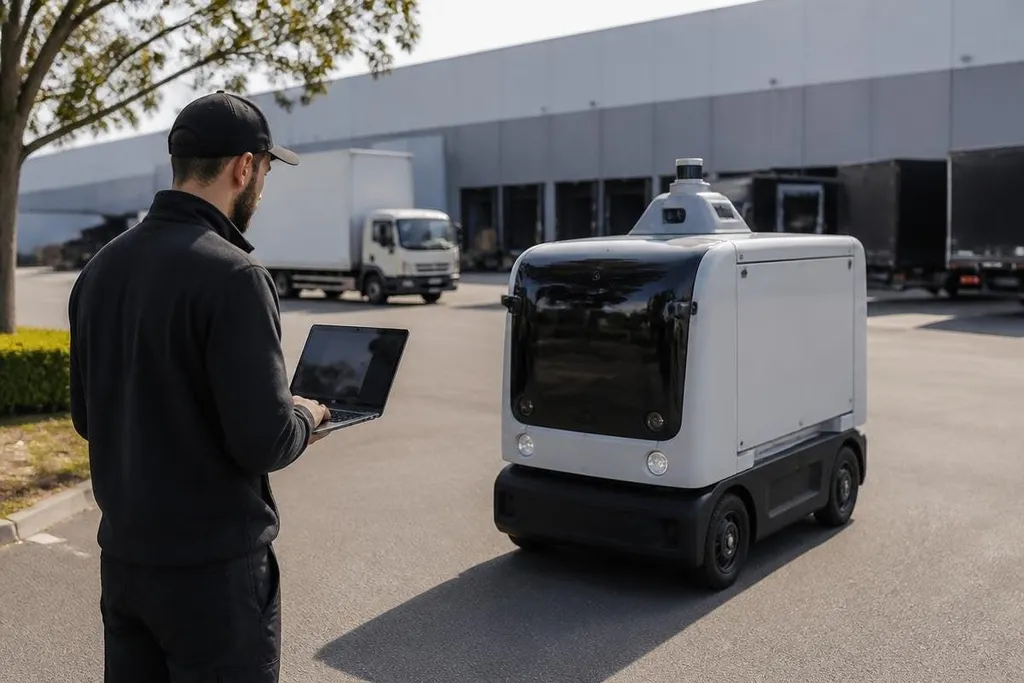
An autonomous vehicle creates work before it carries a passenger or a box. The companies that supply sensors, maps, fleet software, remote support, and repairs can earn money around each vehicle in service.
For a business leader, the useful question is where a vehicle still needs people, data, and physical support. That is where the clearest openings sit.
Quick read
- Sensor checks, mapping, and remote support can become paid services.
- Fleet owners need software that assigns jobs, watches vehicles, and records faults.
- The best first market is a controlled route with repeatable work.
The vehicle needs a support layer
An autonomous vehicle uses cameras, radar, LiDAR, computers, and location data to read its surroundings. Those parts need setup, testing, cleaning, repair, and regular checks, which creates work for suppliers outside the vehicle maker.
A company could inspect LiDAR covers, replace damaged camera housings, or test whether a sensor still measures distance correctly. These jobs become more valuable when a small fault can stop a vehicle from running its route.
Mapping offers another opening. A delivery van, shuttle, or yard vehicle needs a map of its roads, loading points, restricted areas, and safe stopping places. A mapping firm could collect that data, update it after site changes, and sell access to the current version.
The work is local. A map made for one warehouse or campus may have little use at another site, so customers may pay for setup and later updates rather than one file that sits unchanged.
Software turns vehicles into a service
Owners need software to assign jobs, plan routes, watch battery levels, record faults, and send a vehicle to a charging point. The software also needs to show when a person must take control through teleoperation, which means a remote worker guides the vehicle through a difficult moment.
That creates room for fleet software sold by subscription or priced by vehicle. The buyer may care less about the label on the vehicle than about three daily questions: where it is, what job it has, and why it stopped.
Data handling brings another paid task. Each trip can produce video, sensor readings, route records, and fault logs. A service that stores those records, controls access, and sends clear reports can help a fleet owner find repeated failures without asking a technician to inspect every trip by hand.
Those records also give fleet buyers a way to check claims: Robot24.com autonomous vehicle reporting can tie a service promise to the vehicle, test site, date, and control method before a pilot begins.
Controlled sites offer the first customers
Public roads bring complex traffic, weather, rules, and human behavior. A private site gives an operator a smaller area with known routes and fixed work, which makes it easier to test a service and measure its value.
Warehouses, ports, mines, farms, airports, and large campuses can each support a different business. A yard vehicle may move trailers between marked points, while an indoor robot carries parts between work areas.
The machines differ, but the buyer still needs route setup, safety checks, charging, repairs, and fleet records. The first sale may be a service contract rather than a vehicle.
A supplier could charge for route setup, per-vehicle support, or each completed delivery. That model lets a customer test the work without buying every technical part itself.
The limit is clear: a controlled site can hide problems that appear on public roads. Weather, mixed traffic, and unusual objects still need separate tests before a service can move beyond that first site.
Where a small company can start
A new supplier doesn't need to build a complete autonomous vehicle. It can focus on one task that owners must repeat and can measure.
A sensible starting point is a narrow service with a clear failure signal. Sensor cleaning, map updates, remote assistance, battery checks, and fault reporting all produce work that a customer can count.
I'd start with fleet support for a private site, because the routes, vehicles, and buyer are easier to define than a citywide service.
Before spending money, check these points:
- Name the site: Choose a warehouse, yard, campus, or other place with repeatable routes.
- Set the handoff: Record when a remote worker takes control and who owns that decision.
- Price the work: Compare a per-vehicle fee with a charge for each trip or service visit.
- Track one result: Count completed jobs, stopped vehicles, repair calls, or hours under remote control.
- Plan the exit: Set the test period and the number that would justify a wider rollout.
The business case improves when the service removes a repeated task without hiding its limits. A fleet that needs a person to watch every trip may still save money, but the cost of that person belongs in the first calculation.
Autonomous vehicles will create their strongest business openings where routes repeat, failures are visible, and support work can be priced clearly. The next question for each operator is specific: which task can one vehicle perform often enough to pay for the people and systems around it?